
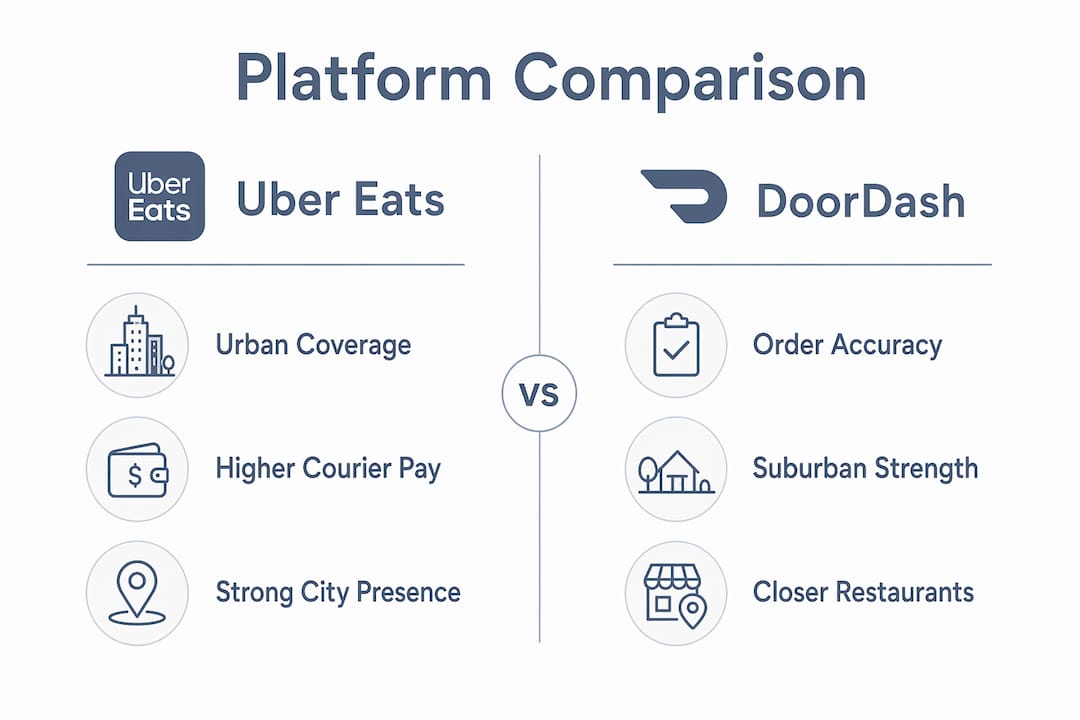
For Queensland restaurants, cafés, and bars, the UberEats vs DoorDash decision comes down to one thing: where your customers actually live. Uber Eats wins in dense urban pockets like Brisbane's CBD and inner suburbs, while DoorDash tends to hold stronger ground in outer suburban and regional areas. Neither platform is universally better. The right choice depends on your postcode, your customer base, and how much you're willing to pay in commissions.
Here's what separates them at a glance:
- Coverage: Uber Eats concentrates on high-density urban zones; DoorDash covers suburban and smaller metro areas more broadly.
- Delivery speed: Uber Eats tends to deliver faster in big cities due to driver network density; DoorDash is more consistent in suburban and regional areas.
- Commissions: Both platforms charge restaurants commission fees from 6% up to 30% depending on order type and package.
- Dynamic pricing: Both use real-time algorithms that push delivery fees up during peak demand, directly affecting what customers pay at checkout.
- Order accuracy: DoorDash has an edge here, with photography requirements and restaurant partnerships that reduce missing or incorrect items.
- Ecosystem integration: Uber Eats integrates with the broader Uber platform including ride services, which appeals to urban, tech-oriented consumers. DoorDash focuses primarily on food delivery.
- Memberships: DashPass and Uber One both offer reduced fees for subscribers, but their value depends on how often your customers order and whether they use Uber's other services.
Table of Contents
- How does coverage and delivery performance compare across Australia?
- What do customer experience and pricing dynamics actually look like?
- What should your venue actually evaluate before choosing a platform?
- How can your venue grow beyond the delivery app listing?
- Key Takeaways
How does coverage and delivery performance compare across Australia?
Industry experts agree that local driver density, restaurant popularity in the area, and current promotions matter far more than any national ranking. A venue in Fortitude Valley will have a very different experience than one in Ipswich or the Sunshine Coast hinterland.
| Factor | Uber Eats | DoorDash |
|---|---|---|
| Urban coverage | Strong in Brisbane CBD and inner suburbs | Present but less dominant in dense city cores |
| Suburban reach | Moderate | Stronger across outer suburbs and regional towns |
| Delivery speed (urban) | Faster, driven by higher driver concentration | Slightly slower in dense areas |
| Delivery speed (suburban) | Variable, can lag in lower-density zones | More consistent due to broader suburban network |
| Driver network model | Draws on Uber's existing ride network | Independent Dashers with suburban focus |
| Regional availability | Limited outside major metros | Better coverage in smaller Queensland markets |
Uber Eats drivers tend to earn more per hour, which attracts experienced couriers in high-demand city areas. DoorDash drivers benefit from more consistent order volume, particularly in suburban zones where Uber's network thins out. For a café in Chermside or a bar in Toowoomba, that consistency matters more than peak-hour speed.
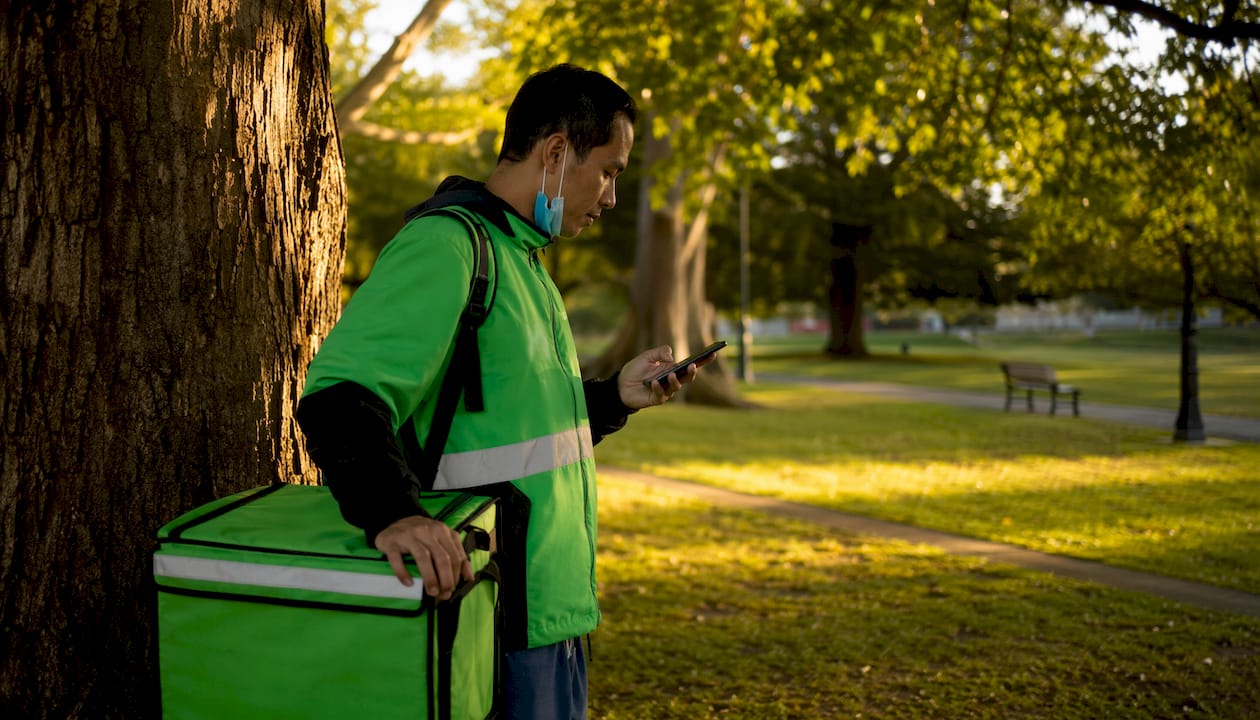
Pro Tip: Check both apps for your specific postcode before committing. Venue owners should assess hyper-local factors like driver availability and average delivery times by suburb rather than relying on national data.
What do customer experience and pricing dynamics actually look like?
DoorDash holds a clear advantage in order accuracy. Its photography requirements for restaurant listings and closer restaurant partnerships reduce the frequency of missing items and wrong orders, which directly affects your venue's reputation on the platform.
Uber Eats performs well in urban markets where customers expect short delivery windows and diverse restaurant options. Its customer support runs through the broader Uber platform, which can mean faster digital resolution but less direct human contact. DoorDash's support is generally considered more hands-on, with customers and venues reporting more direct resolution pathways.
Pricing is where both platforms get complicated:
- Dynamic pricing: Both platforms use real-time algorithms that cause delivery fees to fluctuate significantly based on demand, time of day, and driver availability.
- Service fees: Uber Eats service fees can reach up to 15% of the order subtotal; DoorDash typically sits around 10–11%.
- Subscriptions: DashPass and Uber One have monthly subscription fees, with US pricing around ten dollars; Australian pricing may vary. In Australia, pricing may vary. DashPass offers free delivery on qualifying orders and exclusive deals. Uber One bundles ride discounts with food delivery perks, which appeals to customers already inside the Uber ecosystem.
- Surge pricing: Both platforms apply surge fees during peak hours, which can push the final order cost well above what customers expect.
Pro Tip: Routinely check promotional pricing at checkout on both platforms. Dynamic pricing means the cheaper option changes daily, and the only reliable method to identify the best deal is to compare live quotes each time.
Subscription models deserve scrutiny before you encourage customers to commit. Their value depends on how frequently a customer orders and whether they use Uber's ride services. A customer who orders twice a week and uses Uber for transport gets genuine value from Uber One. Someone who orders occasionally and drives their own car probably doesn't.
What should your venue actually evaluate before choosing a platform?
The commission structure is the first number to interrogate. Both platforms charge restaurants fees ranging from 6% for pickup orders to 15–30% for delivery, depending on the package you select. At 30%, a $40 order nets your kitchen $28 before food costs. That math changes your menu pricing strategy entirely.
Beyond commissions, here's what to assess:
- POS integration: Uber Eats integrates with a wider range of point-of-sale systems in Australia, including Square and Lightspeed. DoorDash has expanded its integrations but may require middleware for some setups. Confirm compatibility with your current system before signing.
- Driver availability by suburb: Use both apps as a customer from your own address. Check estimated delivery times on a Friday night. That live test tells you more than any sales pitch.
- Marketing and advertising tools: Both platforms offer paid placement and promotional tools for venues. Uber Eats' ad products tend to favor urban restaurant discovery. DoorDash's promotional tools are often more accessible for suburban venues with smaller budgets.
- Customer demographics: DoorDash users skew suburban with regular ordering habits. Uber Eats attracts urban, tech-oriented consumers who order from premium and popular restaurants. Match the platform to where your actual customers live.
- Payment terms: Both platforms pay venues on a weekly cycle in Australia, though payout schedules can vary. Confirm the exact terms in your merchant agreement, particularly around dispute resolution and refund deductions.
- Order frequency impact: A platform with stronger coverage in your area will generate more orders, which compounds over time. A venue in a suburban growth corridor like Springfield or North Lakes may find DoorDash generates meaningfully more volume than Uber Eats.
How can your venue grow beyond the delivery app listing?
Delivery apps put your menu in front of hungry customers. They don't build the kind of brand recognition that makes people choose your venue over the one next door. That gap is where PR and influencer marketing do the work that algorithms can't.
Combining your delivery platform presence with a curated content strategy creates a compounding effect. A food creator posts a reel from your venue on a Thursday night. That content drives profile visits, saves, and direct bookings, and it also pushes customers to search for you specifically on Uber Eats or DoorDash rather than browsing the app cold. Branded search on delivery platforms converts at a higher rate than discovery browsing.
Here's how venues in Queensland are making this work:
- Micro-influencer collaborations: Creators with 5,000–50,000 local followers drive genuine foot traffic and delivery orders because their audiences trust their recommendations. A single well-executed collaboration can outperform a month of paid placement on a delivery app.
- PR storytelling: A venue with a compelling story, a chef with a background worth telling, or a space with genuine character gets coverage that no algorithm can replicate. That coverage builds the kind of credibility that turns a first-time delivery customer into a regular diner.
- Paid social alongside delivery listings: Running targeted Meta or TikTok ads that direct traffic to your delivery profile amplifies the platform's own discovery tools. Restaurant marketing integration with delivery platform usage creates a feedback loop where social content drives app orders and app reviews reinforce social credibility.
- Launch and event campaigns: A new menu launch or venue anniversary is a natural hook for influencer content, PR outreach, and a delivery platform promotion running simultaneously. The three channels reinforce each other.
- Consistent content creation: Venues that publish regular, high-quality content on Instagram and TikTok maintain visibility between campaigns. That consistency is what keeps your venue top of mind when a customer opens a delivery app on a Tuesday night.
Bridgepr works with Queensland restaurants, cafés, and bars to build exactly this kind of presence. From micro-influencer campaign management to PR-style storytelling and paid social support, Bridgepr's hospitality packages are built for venues that want to be talked about, booked, and recommended, not just listed.
Key Takeaways
DoorDash suits suburban Queensland venues better, while Uber Eats leads in dense urban areas, but commission fees of up to 30% make platform choice a direct profitability decision for every venue.
| Point | Details |
|---|---|
| Coverage depends on location | Uber Eats leads in Brisbane's CBD; DoorDash is stronger in outer suburbs and regional Queensland. |
| Commissions affect margins directly | Both platforms charge up to 30% commission on delivery orders, requiring careful menu pricing. |
| Dynamic pricing shifts daily | Delivery fees fluctuate in real time on both platforms; compare live quotes before committing to one. |
| Demographics should guide your choice | DoorDash attracts suburban, frequent orderers; Uber Eats skews urban and tech-oriented. |
| Delivery apps alone don't build brands | Influencer collaborations and PR campaigns drive branded search and repeat visits beyond app discovery. |