
Restaurant social media is the practice of using focused, authentic visual content across key platforms to attract, engage, and retain diners. 74% of consumers use social media to decide where to eat. That single fact makes your Instagram grid, TikTok feed, and Facebook page as important as your front door. Queensland's dining scene is competitive, from South Bank to the Sunshine Coast, and owners who treat social media as a digital storefront consistently outperform those who post sporadically and hope for the best. A focused restaurant social media strategy is not optional in 2026. It is the baseline.
Which social media platforms work best for restaurants?
Platform choice is the first decision that shapes everything else. Spreading your effort across five channels produces mediocre results on all of them. Mastering one primary platform before expanding yields far better algorithmic distribution and audience growth.
Instagram is the strongest starting point for most Queensland restaurants. 60% of Instagram users actively browse food content. The platform rewards consistent posting, strong photography, and Stories that show daily specials or behind-the-scenes prep. Reels now receive the widest organic reach on the platform, making short video the format to prioritize.
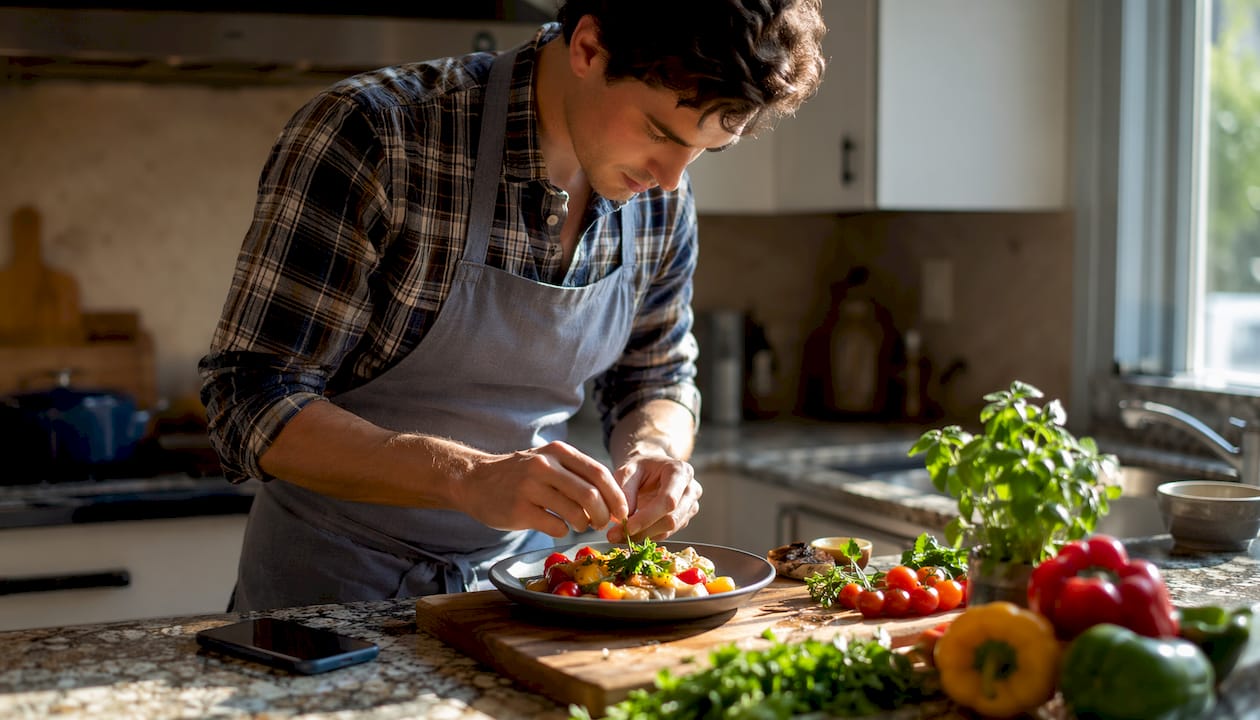
TikTok has become the discovery engine for younger diners. 61% of diners say TikTok videos influence their dining decisions. A 30-second clip of a cheese pull, a cocktail being poured, or a chef plating a dish can reach thousands of people who have never heard of your venue. TikTok's algorithm rewards authenticity over production value, which means a phone camera and good lighting are genuinely enough.
Facebook still serves a clear purpose. It performs best for event promotion, community groups, and reaching diners over 35. Running Facebook ads for restaurants targeting local postcodes remains one of the most cost-effective paid tactics available, particularly for weekend specials or seasonal menus.
Google Business Profile sits outside the traditional social media category but belongs in every restaurant's digital marketing plan. Optimized Google Business Profiles receive five times more direction requests than basic listings. Keeping your hours, photos, and menu current on Google directly drives foot traffic.
- Start with one platform and post consistently for 60 days before adding a second.
- Use Instagram for food photography and daily Stories.
- Use TikTok for discovery and reaching new audiences under 40.
- Use Facebook for events, ads, and community engagement.
- Keep Google Business Profile updated weekly.
Pro Tip: Film content in batches during prep time on Tuesday or Wednesday, when kitchens are quieter. Three hours of filming can produce two weeks of posts across Instagram and TikTok.
What content types drive engagement and bookings?
Content is where most restaurants lose momentum. They post a dish photo, then another dish photo, then a promotional graphic, and wonder why engagement drops. The fix is a structured content diet.
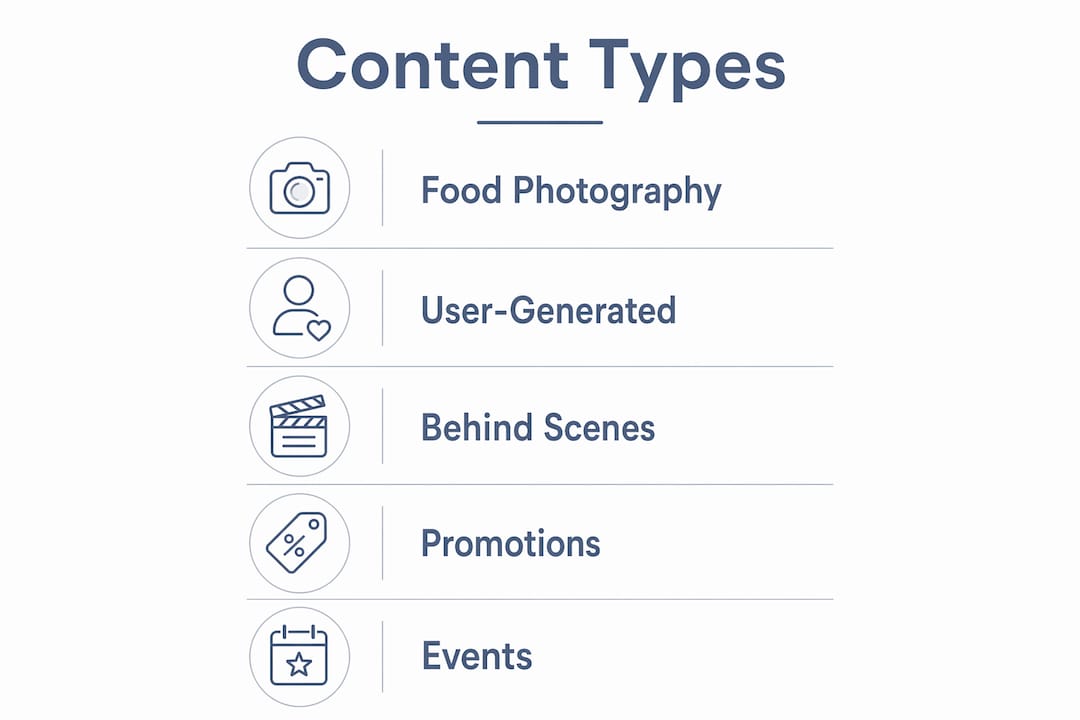
The recommended split is 50% food and menu content, 25% people and team content, and 25% engagement and events content. This ratio keeps your feed from feeling like a catalog while still showcasing what you sell. Followers connect with the people behind the food as much as the food itself.
The four content types that consistently perform
-
Food photography and short video. Shoot dishes in natural light near a window. Overhead shots work for flat lays; 45-degree angles show depth and texture. A 15-second Reel of a dish being assembled outperforms a static photo on every platform in 2026.
-
Behind-the-scenes content. Show your kitchen team during prep, your chef sourcing produce at the Rocklea Markets, or your bartender developing a new cocktail. This content builds trust and personality without requiring a script.
-
User-generated content (UGC). UGC converts four times better than branded photos. Reshare guest photos with credit, create a venue hashtag, and actively encourage guests to tag you. A table tent card with your Instagram handle and a simple "Tag us for a chance to be featured" prompt is enough to start the flow.
-
Engagement posts. Polls, "this or that" food questions, and limited-time offer countdowns in Stories drive interaction. Instagram's algorithm rewards saves and shares more than likes, so posts that prompt a decision or a share outperform passive scroll content.
| Content type | Best platform | Posting frequency |
|---|---|---|
| Food photography | 3–4 times per week | |
| Short video (Reels/TikTok) | TikTok, Instagram | 3–5 times per week |
| Behind-the-scenes | Instagram Stories, TikTok | Daily or near-daily |
| UGC reshares | Instagram, Facebook | 1–2 times per week |
| Events and promotions | Facebook, Instagram | As needed |
Pro Tip: Create a "content corner" in your venue: a well-lit spot with a clean background where staff and guests can photograph dishes. Good lighting is the single biggest upgrade you can make to your content quality.
How often should restaurants post on social media?
Posting frequency is one of the most misunderstood parts of restaurant online presence. Volume without consistency does nothing. Restaurants that post 4–5 times per week significantly outperform those with erratic schedules, even when the erratic posters publish more total content over a month.
The recommended cadence for most venues is 3–5 posts per week on Instagram and TikTok, plus daily Stories on Instagram. Restaurants using a batch content system spend approximately 65 minutes per week maintaining their presence. That is less time than most owners spend on a single supplier call.
Timing matters as much as frequency. Post food content between 11:00 AM and 12:30 PM to catch diners making lunch decisions, and between 4:30 PM and 6:30 PM for dinner consideration. Sunday evenings perform well for weekly specials announcements. Queensland audiences tend to engage heavily on Friday afternoons ahead of weekend dining plans.
- Post 3–5 times per week on Instagram and TikTok.
- Publish Instagram Stories daily, even if it is just a quick kitchen update.
- Schedule posts for 11:00 AM to 12:30 PM and 4:30 PM to 6:30 PM on weekdays.
- Batch-film content once or twice per week to stay ahead of the schedule.
- Consistency over 60 days builds algorithmic momentum that sporadic posting never achieves.
The key insight here is that consistency signals reliability to both algorithms and followers. A venue that posts every Tuesday, Thursday, and Saturday trains its audience to expect content. That expectation builds a habit, and habits drive repeat visits.
How does social media fit into your broader digital presence?
Social media for restaurants works best when it connects to a wider digital ecosystem. Treating it as a standalone channel limits its impact. Foundational digital assets like Google Business Profile, a mobile-friendly website, and online reviews should be in place before investing heavily in paid social ads.
The most effective integration points are:
Google Business Profile. Update your photos monthly, respond to every review, and post weekly updates using the Posts feature. This directly improves local search rankings and drives direction requests from people who found you on Instagram but then Googled your address.
Review management. Moving from 3.8 to 4.5 stars can increase walk-in traffic by 30–50%. Train staff to request reviews in person at the end of a meal. Place QR codes on receipts and table tents linking directly to your Google review page. Respond to every review publicly, including negative ones. A professional, calm response to a critical review is visible marketing to every future guest who reads it.
Email and loyalty programs. Social media attracts new guests. Email and loyalty programs keep them coming back. Retention is more critical than acquisition for long-term growth. Collect email addresses through reservation systems, loyalty card sign-ups, or a simple in-venue QR code. A monthly email featuring a new menu item or an exclusive offer costs almost nothing and drives repeat bookings.
Online ordering and reservations. Link your Instagram bio and Facebook page directly to your booking or ordering platform. Every extra click between a social post and a confirmed reservation loses potential guests. Make the path from "I saw this on TikTok" to "I have a table booked" as short as possible.
Key Takeaways
A focused platform choice, consistent posting, and integration with Google Business Profile and review management form the foundation of effective restaurant social media.
| Point | Details |
|---|---|
| Platform focus first | Master one platform for 60 days before expanding to a second channel. |
| Content diet balance | Split posts 50% food, 25% people, and 25% engagement to maintain follower interest. |
| UGC outperforms branded content | Guest-shared photos convert four times better than branded images; actively encourage tagging. |
| Consistency beats volume | Posting 3–5 times per week on a fixed schedule outperforms erratic high-volume posting. |
| Reviews are marketing | Responding publicly to reviews influences future guests and can lift walk-in traffic significantly. |
What most restaurant owners get wrong about social media
The biggest mistake I see Queensland restaurant owners make is treating their social feed like a digital menu board. Every post is a dish photo with a price. Every caption is a call to book. Followers disengage fast when a feed feels like an ad loop, and the algorithm punishes low engagement with reduced reach.
The venues that build real audiences show the people behind the food. A 20-second clip of your head chef explaining why they source their barramundi from a specific Queensland supplier does more for trust than ten polished dish photos. Authenticity is not a style choice. It is the mechanism that makes social media work.
The second mistake is ignoring reviews until they become a crisis. Public review responses are free marketing. A thoughtful reply to a negative review shows future guests that you take quality seriously. A warm reply to a glowing review reinforces the experience and encourages the reviewer to return. Most owners skip this entirely, leaving a significant reputation-building opportunity unused.
The third mistake is chasing every new platform. TikTok, Instagram, Facebook, YouTube Shorts, Pinterest. Trying to maintain all of them with a small team produces nothing worth watching on any of them. Pick the platform where your guests already spend time, get genuinely good at it, and then consider expanding. Depth beats breadth every time.
— Jonathan
How Bridgepr helps Queensland restaurants build a social presence worth talking about
Bridgepr works with restaurants, cafés, and bars across Queensland to build social media presence that drives real bookings, not just likes. The team pairs premium content strategy with food creators and local influencers who already have the trust of your ideal guests.
If your venue has a great product but a social feed that does not reflect it, Bridgepr builds the content systems, creator partnerships, and engagement campaigns that close that gap. Every campaign is built around your specific venue, your neighborhood, and the guests you want to attract. Visit Bridgepr's hospitality PR services to see how the team approaches restaurant brand storytelling and influencer collaboration in Queensland.
FAQ
How often should a restaurant post on social media?
Post 3–5 times per week on Instagram and TikTok, plus daily Instagram Stories. Consistency outperforms volume, and a fixed weekly schedule builds algorithmic momentum faster than erratic posting.
What is the best social media platform for restaurants?
Instagram is the strongest starting point for most restaurants due to its food-focused audience and Reels reach. TikTok is the top discovery platform for diners under 40, with 61% of diners saying TikTok videos influence their dining decisions.
Does user-generated content really help restaurants?
Yes. UGC converts four times better than branded photos. Resharing guest content with credit builds social proof and encourages more guests to tag your venue.
How does Google Business Profile connect to restaurant social media?
Google Business Profile is a foundational digital asset that amplifies social media efforts. Optimized listings receive five times more direction requests, and guests who discover you on social media often confirm your address and hours on Google before visiting.
Should restaurants respond to negative reviews on social media?
Yes, always. A professional public response to a negative review signals quality and care to every future guest who reads it. Defensive or dismissive replies damage reputation far more than the original complaint.